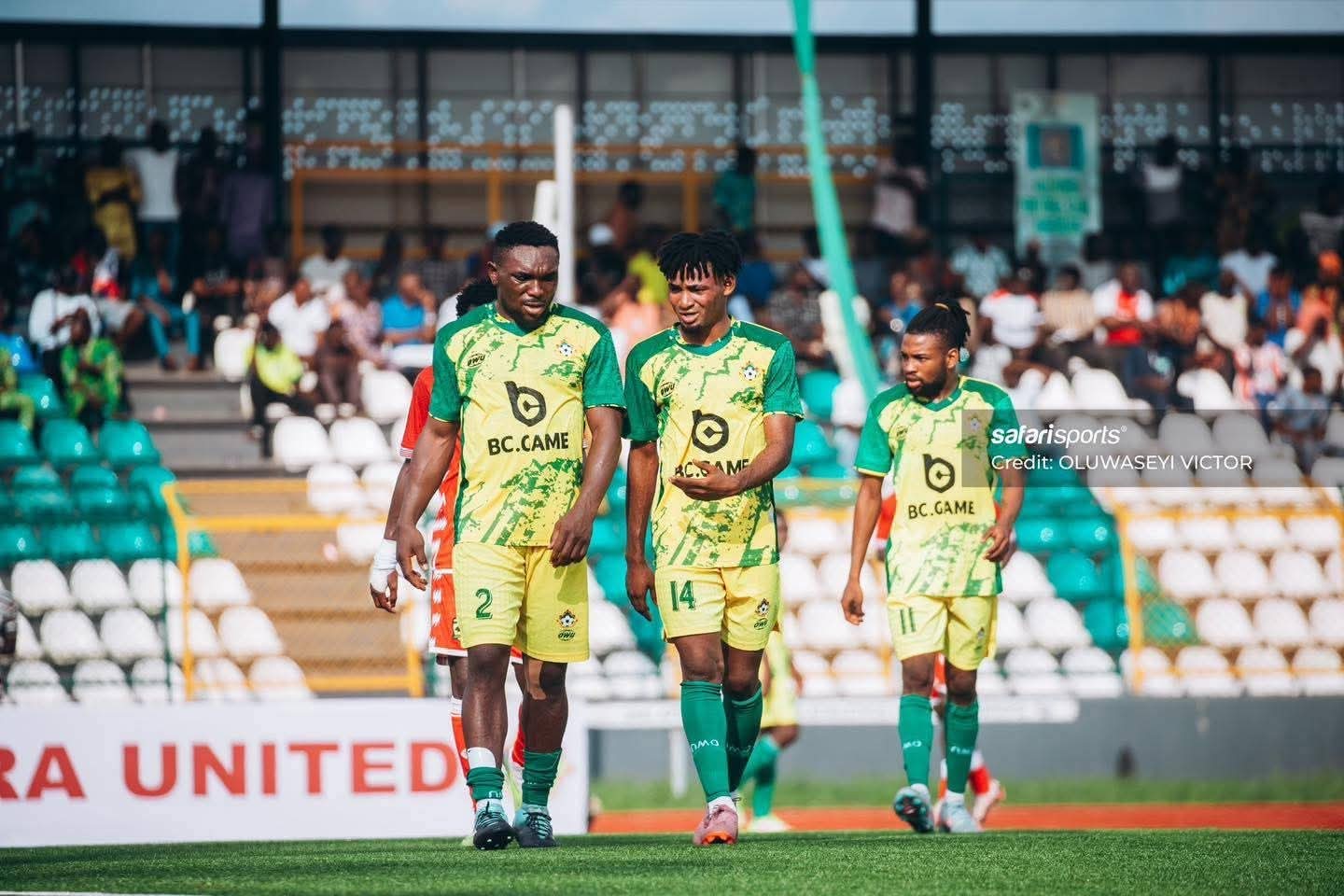
When Hubert Gyalu struck a left-footed volley into the bottom corner just after the hour mark at the Moshood Abiola Stadium in Abeokuta, the atmosphere changed instantly. Hope gave way to despair; excitement dissolved into lamentation. The sighs and groans that spread across the stands captured the magnitude of the moment.
That goal meant Kwara United needed two more to progress against a disciplined and determined Kotoko team. The expectations were heavy, especially after the seven-goal thriller in Accra which had left fans optimistic about a decisive home performance.
Yet, one striking factor was the absence of true home support. Abeokuta could not replicate the passionate backing Kwara United are accustomed to in Ilorin. It felt like another away game, just as in the 2023 CAF Cup campaign when the team had to adopt Lagos as their base. Ironically, Kwara enjoyed more vocal encouragement in Accra — where a large Nigeria-Ilorin community turned out — than in Abeokuta, where only a handful of stakeholders, journalists, and concerned fans made the trip.
On the field, United were not entirely poor. They created chances that could have changed the story, but wastefulness cost them. Kotoko, on the other hand, were tactically superior, especially after halftime when they controlled proceedings before scoring.
Coach Tunde Sanni could not hide his frustration at full time, openly criticizing his players. His Kotoko counterpart, Karim Zito, revealed that his team stopped Kwara from thinking outside the box after a detailed video analysis of the first leg. He went further to question Kwara’s approach, describing them as “bad hosts.”
The game underlined some unacceptable truth: Kotoko were organized, clinical, and purposeful, while Kwara lacked decisiveness. The lingering question is whether the result might have been different had the game been played in Ilorin. The inability of the state stadium to meet CAF standards continues to handicap the club. As the saying goes, “If one walks the same path twice in a forest, it is either you are lost or you have unfinished business.”
For a government-funded team, playing continental fixtures outside home soil on two consecutive occasions, undermines both value and identity. The urgent completion of the Ilorin stadium is non-negotiable. While philanthropists like A.U Mustapha SAN have attempted to intervene, the ultimate responsibility rests with Governor Abdulrahman Abdulrazaq’s administration.
At the final whistle, the atmosphere among officials reflected the blow. Executive Chairman of the State Sports Commission, Bola Mogaji, looked stunned and disoriented, as he wandered in a daze, searching and had to ask me for the exit as if the defeat had stolen his way.
Club chairman Kumbi Titiloye, his white beard glistening beneath the shade of goggles and a face cap, lingered after the final whistle as his face was heavy with the sorrow of a traveller who mistimed his journey and now watches the plane disappear into the clouds. Same for members of the State Football Association, who had earlier exchanged pleasantries with NFF President Ibrahim Gusau, stood motionless, scarves clenched in frustration.
Veteran journalist Hameed Adio was spotted conducting interviews, while dignitaries such as the State Independent Electoral Commission chairman, Baba Okanla amongst others, also weighed in with candid assessments.
While those with urgent assignments back home slipped away swiftly after the final whistle, the majority now drift along the homeward road, their journeys unfolding beneath the fading echoes of the game.